

Simple, soul-nourishing ways to manage stress.
Stress is something we all encounter. It creeps in through long to-do lists, unexpected bills, emotional weight, and even the pressure to “stay positive.” Sometimes, it shows up as sleepless nights. Other times, it’s the feeling of tightness in your chest that won’t go away. But amidst the chaos, there is always a gentle path back to balance—and more importantly, to a happy mind.
In this article, we’re going to explore simple, soul-nourishing ways to manage stress. And as we go, I’ll share a deeply personal journey—one that taught me how powerful even the smallest acts of self-care can be when done with love and intention.
The Day My World Shifted
A few years ago, I was holding everything together—at least on the outside. I had a job that demanded my full attention, a family I adored but barely had time for, and a mind that wouldn’t stop racing.
At first, the stress felt manageable. I brushed it off as being “just busy.” But slowly, I began to change. I was more irritable. My sleep suffered. I forgot things. I felt disconnected—from my friends, from my joy, from myself.
One rainy afternoon, I sat in my car in a supermarket parking lot and cried so hard I couldn’t breathe. I had no idea what had triggered it. But that moment became the turning point. I realized I wasn’t fine. And I didn’t want to just survive anymore. I wanted to heal.
What followed was not an instant transformation, but a gentle rebuilding. One small practice at a time. These are the tools I still turn to—and the ones I now share with you.
1. Journaling – Clearing the Clutter of the Mind
Journaling became my lifeline.
There was a time when everything felt overwhelming—when thoughts spun endlessly in my head, and emotions I couldn’t name sat heavily on my chest. I didn’t know how to begin unraveling it all. So I reached for a notebook, not to be profound or poetic, but simply because I needed somewhere to place the weight I was carrying.
At first, I didn’t know what to write. I stared at the blank page, unsure how to begin. Eventually, I wrote the only thing I could think of: “I feel…” and let the pen move from there. It was messy and unfiltered. Some days, the words poured out in frustration and confusion. Other days, they came out like a whisper—small pockets of gratitude for things I hadn’t noticed before: the smell of rain on dry pavement, the way morning light fell across the table, the feeling of holding a warm mug between my palms. These tiny reflections became anchors in the storm.
Journaling helped me make sense of the noise in my mind. Over time, it became more than just a coping tool—it became a quiet place of honesty, where I could show up exactly as I was. No filters. No judgment. Just truth. In a world that often expects us to perform or present a certain way, journaling gave me permission to be—messy, hopeful, tired, joyful, healing—all of it.
And here’s the beautiful part: science agrees. Research shows that expressive writing can reduce anxiety, strengthen emotional regulation, and even support immune function. A landmark study by psychologist Dr. James Pennebaker found that people who wrote about their deepest thoughts and feelings for 15–20 minutes a day over several days experienced significant improvements in both mental and physical health. Journaling has also been linked to improved memory, sharper focus, and a deeper sense of self-awareness.
You don’t need to be a writer. You don’t need perfect grammar or long, poetic entries. You just need a pen, a bit of honesty, and a few minutes to check in with your inner world.
Try this gentle prompt:
- “Right now, I am carrying…”
- “What I need most today is…”
- “One small moment I’m grateful for today is…”
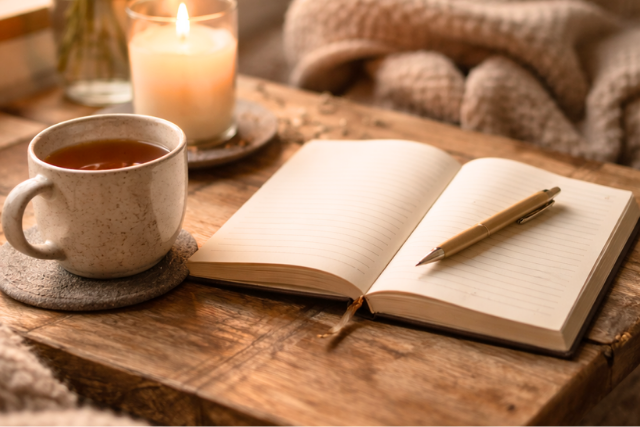
Whether it’s five minutes before bed or while your tea is steeping in the morning, journaling can help lift the fog, untangle the knots, and bring you back to yourself—one word at a time.
2. Meditation – The Art of Returning to the Moment
When I first tried meditation, I thought I was doing it wrong.
I sat down, closed my eyes, and waited for the peace to arrive.
Instead, my mind went into overdrive. I thought about what I needed to cook for dinner, whether I’d replied to that message, whether I even had time to be sitting there doing “nothing.” I got fidgety. My back hurt. I opened one eye. I sighed. And the silence wasn’t peaceful—it was noisy.
I genuinely thought I was failing at meditation. No one had told me that a racing mind wasn’t a sign of doing it wrong—it was a sign that I needed it.
What I didn’t realise then was this: meditation isn’t about clearing the mind completely. It’s not about achieving a perfect state of Zen. It’s about practicing coming back—again and again—to this moment. Like returning to the breath after being swept away in a wave of thoughts. Each time you bring your attention back to your breath, your body, or the present, you’re strengthening a muscle. Not a physical one, but an inner one—resilience, presence, stillness.
Eventually, I found my own rhythm. I started small—just three minutes a day. I let go of the idea of “doing it right” and focused instead on just being there. I used guided meditations with gentle voices that helped anchor me. I lit a candle, sometimes played soft music, and made it a ritual instead of a task.
Something began to shift.
I started noticing my thoughts without getting swept up in them. I became less reactive—pausing before snapping back at someone or spiraling into worry. I softened. My nervous system began to feel safer. And in those small, quiet pockets of breath and awareness, I began to rebuild trust in myself.
What the Science Says
Modern neuroscience has caught up with ancient wisdom. Studies show that regular meditation can physically change the structure of the brain. It reduces activity in the amygdala (the brain’s fear center), increases gray matter in areas associated with emotion regulation and attention, and helps strengthen the prefrontal cortex—the part of the brain responsible for decision-making and self-control.
A 2018 study in Frontiers in Human Neuroscience found that even short, consistent meditation practices can significantly reduce stress and anxiety, improve sleep, and boost mood. Another report published in JAMA Internal Medicine showed that mindfulness meditation can be as effective as antidepressants for people with mild to moderate anxiety or depression.
But perhaps the greatest proof is how it feels afterward. There’s a groundedness that settles into the body. A little more space between your thoughts. A little more compassion toward yourself and others.
Try This: A Gentle Meditation Starter
- Download a free app like Insight Timer, Smiling Mind, or Calm. These offer beginner-friendly meditations specifically for stress, anxiety, or grounding.
- Start with just 3–5 minutes. Set a timer if you prefer silence, or choose a short guided track.
- Sit or lie down comfortably. Close your eyes or soften your gaze. Place one hand on your heart if it feels calming.
- Focus on your breath. Notice the inhale, the exhale. Let thoughts come and go—like clouds passing in the sky.
- Let it be messy. Some days will feel peaceful. Others, restless. It’s all part of the practice.
Meditation doesn’t require incense, robes, or hours of silence. It simply requires a willingness to pause. To listen. To return. And in that returning, moment by moment, you’ll find your way back to yourself.
3. Gentle Movement – Yoga for the Overwhelmed Mind
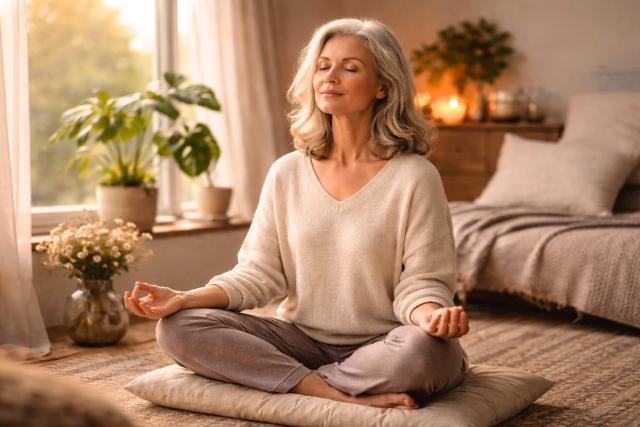
Yoga taught me how to breathe again.
I used to think yoga wasn’t for people like me.
In my mind, yoga belonged to impossibly flexible people in designer tights, flowing effortlessly into handstands with glowing skin and perfectly curated playlists. I didn’t feel like I belonged in that world—I was tired, emotionally knotted, and honestly just trying to make it through the day without falling apart.
But then I stumbled across a beginner yoga video online. No mirrors. No fancy poses. Just someone moving slowly and kindly, inviting me to take a deep breath and follow along in whatever way felt right. I didn’t have to bend like a pretzel or balance on one foot. I just had to show up.
What I found was something I didn’t expect—a practice that welcomed me exactly as I was: a little tense, a little overwhelmed, a little broken… and completely enough.
One teacher said something I’ve carried in my heart ever since: “This is not a performance. It’s a conversation with your body.”
That phrase changed everything.
Yoga stopped being about shapes and started being about listening. In those gentle stretches and slow movements, I found something I hadn’t felt in a long time—relief. My breath softened. My nervous system began to settle. I wasn’t trying to fix anything—I was just meeting myself where I was.
My body let go a little.
And my mind followed.
The Science of Slow Movement
Yoga—particularly slow, mindful forms like restorative or gentle yoga—has been shown in numerous studies to significantly reduce stress and anxiety levels.
A 2010 study published in The Journal of Alternative and Complementary Medicine found that regular yoga practice decreases cortisol (the stress hormone) and enhances mood by increasing levels of gamma-aminobutyric acid (GABA), a neurotransmitter associated with calm and reduced anxiety. Other studies have linked yoga to better sleep, improved heart rate variability (a key indicator of stress resilience), and reductions in symptoms of depression.
What’s especially powerful is that yoga engages both the body and the breath, helping to anchor the mind in the present moment. It provides physical release, emotional grounding, and mental clarity—all without needing any prior experience or fancy gear.
You Don’t Have to Be Flexible to Do Yoga
One of the biggest myths about yoga is that it’s only for flexible people. The truth? Yoga is for anyone with a body. You don’t need to touch your toes. You don’t need a yoga mat. You don’t even need an hour.
Even five minutes of intuitive, slow movement can change how you feel—physically and emotionally.
Try This: Gentle Yoga Practices for a Happy Mind
- Beginner-friendly video on YouTube:
Search “gentle yoga for stress relief” or “5-minute evening yoga.” I recommend teachers like Yoga with Adriene, Sarah Beth Yoga, or Breathe and Flow—all of whom offer compassionate, body-positive guidance. - Try ‘Legs Up the Wall’ Pose (Viparita Karani):
Lie on your back with your legs resting vertically up against a wall. Place a folded blanket under your hips for support. This posture calms the nervous system, aids digestion, and can help reset your stress response—perfect before bed or when feeling overwhelmed. - Let it be intuitive:
Roll your shoulders. Sway side to side. Reach your arms overhead and take a long breath. Stretch like you’re just waking up. Let your body lead. This is about reconnecting with how you feel, not what it looks like. - Add atmosphere:
Light a candle, play soft music, or open a window to let the fresh air in. Make it a moment that feels like a gift to yourself, not another thing to check off the list.
Yoga isn’t about escaping stress. It’s about returning to yourself with compassion—learning how to move through the world with more softness, strength, and self-trust. And when practiced gently, it becomes one of the most beautiful ways to come home to your body.
So if you’re feeling heavy, scattered, or disconnected today, try moving a little. Just enough to remind yourself that your body is your ally—and that within it lives the quiet, steady rhythm of healing.
4. Creating Your Stress Free Sanctuary – Small Daily Rituals
I began turning everyday moments into little rituals of peace.
There was a time when I felt like I had to earn rest. That slowing down was lazy, or self-indulgent. That life had to be all output, all efficiency, all momentum. But when my stress became constant—showing up in headaches, shallow breathing, and restless sleep—I began craving a kind of stillness that wasn’t about doing nothing… it was about doing things differently.
So I started small.
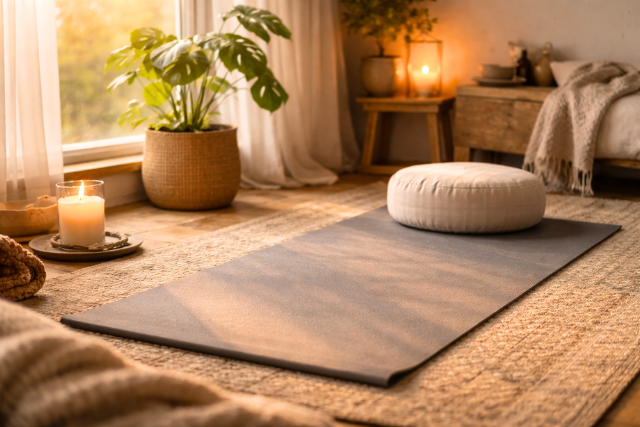
I lit a candle before journaling. I brewed herbal tea slowly, mindfully, without distractions. I placed a few drops of lavender oil on my pillow before bed—not because it would fix everything, but because it made bedtime feel sacred. These were not grand or complicated acts. They were tiny, intentional moments that helped me remember I was allowed to feel safe, calm, and connected to myself.
Over time, these little rituals stitched together a new rhythm—one that felt kinder. Life didn’t stop being busy. But I learned how to punctuate the chaos with softness. And in those pauses, I began to heal.
The Science of Ritual and Rest
Modern research shows what ancient traditions have always known: rituals calm the nervous system. Studies from the fields of psychology and neuroscience suggest that daily rituals—even small ones—can significantly reduce anxiety, increase focus, and improve emotional regulation. Why? Because rituals give the brain a sense of structure and safety.
According to a study in Scientific American, rituals—even seemingly trivial ones—help us feel more in control during times of uncertainty. When we perform familiar, intentional actions (like lighting a candle or making a cup of tea the same way every night), our brain interprets those signals as soothing, predictable, and safe. That feeling of safety is essential for calming the stress response.
And beyond the science, there’s something deeply human about creating beauty in the everyday. It reminds us we are worthy of care—not just when we’re achieving or performing—but simply because we exist.
The Power of Slowness in a Fast World
We live in a culture that rewards speed, multitasking, and constant productivity. We scroll, refresh, consume, and respond—often without pause. But our nervous system wasn’t built for this pace. And it’s not surprising that many of us feel anxious, depleted, or disconnected.
Slowness isn’t weakness. It’s wisdom.
Creating even a tiny sanctuary in your day—just 10 minutes without screens, without expectations—can help reset your entire emotional state. It gives your body time to breathe. Your thoughts space to settle. Your soul a chance to speak.
This is how you create a happy mind: not through perfection, but presence.
Try This: Create Your Own Sacred Mini-Rituals
- Begin the day with intention:
Before checking your phone, take three slow, deep breaths. Stretch your arms overhead. Whisper to yourself, “I begin gently.” - Create a calming space:
Add soft lighting to your home, cozy textures like a knit throw or fuzzy socks, and scents that calm you—lavender, sandalwood, or citrus. Your environment affects your nervous system more than you think. - Turn ordinary moments into meaningful pauses:
- Light a candle before journaling or meditating.
- Listen to calming music while preparing dinner.
- Keep a calming tea ritual—try chamomile, lemon balm, or tulsi.
- Place a hand on your heart when you feel overwhelmed and say, “I’m here. I’m safe.”
- Treat your rituals like sacred appointments:
Block out 10 minutes a day just for you. Put it in your calendar. Protect that space like you would a meeting or a doctor’s appointment—because tending to your inner world is just as important.
Rituals remind us that peace isn’t something we have to chase—it’s something we can cultivate. Moment by moment. Breath by breath.
You don’t need hours of free time, perfect stillness, or a retreat in the mountains to find a sense of sanctuary. You just need to come home to yourself, gently and regularly. And in doing so, you may find that life feels a little less heavy, and your mind—a little more free.

5. Asking for Support – The Bravest Thing You Can Do
This part was the hardest for me.
Asking for help.
I had always worn the badge of “strong” like armor. I was the dependable one. The helper. The friend who showed up, held space, made sure everyone else was okay. I knew how to give support—but receiving it? That felt like failure.
I’d internalised the message so many of us are quietly taught: that needing help means you’re weak, dramatic, or not coping. So I tried to carry it all on my own. The stress. The sadness. The sleepless nights. The fear of not being enough. I smiled through it, performed normalcy, and told myself I was “fine.”
But the truth was—I wasn’t fine.
I was unraveling inside.
It took one particularly heavy evening, full of tears I couldn’t swallow anymore, for me to reach out. I sent a simple message to a close friend: “I think I’m not okay. Can I talk to you?”
Her reply came instantly: “Me too. Please call.”
That tiny exchange cracked something open in me. I realized I wasn’t broken for feeling overwhelmed—I was human. And suddenly, I wasn’t alone in the darkness anymore.
Why Connection Matters
Stress and anxiety thrive in isolation. When we bottle up our emotions, they don’t go away—they multiply. According to research published in The American Journal of Psychiatry, loneliness and perceived isolation are directly linked to increased levels of cortisol (the primary stress hormone), inflammation, and symptoms of depression.
Social connection, on the other hand, has a protective effect. Studies show that having even one trusted person you can confide in significantly improves mental health outcomes. Human connection triggers the release of oxytocin—sometimes called the “bonding hormone”—which lowers stress, calms the nervous system, and promotes a sense of safety.
In simpler terms?
We’re wired to heal in relationship—not in solitude.
Vulnerability Isn’t Weakness—It’s a Strength in Disguise
We often think strength means holding it together. But true strength is knowing when to let go. It’s having the courage to say: “I need help,” or “I’m not sure I can do this alone.”
Brené Brown, one of the world’s leading researchers on shame and vulnerability, beautifully reminds us:
“Vulnerability sounds like truth and feels like courage. Truth and courage aren’t always comfortable, but they’re never weakness.”
When you open up to someone—whether it’s a friend, a therapist, a support group, or a helpline—you give yourself permission to be real. And in that honesty, you create space for connection, empathy, and relief. You create the conditions for healing.
Try This: Opening the Door to Support
- Reach out to one person this week.
It doesn’t have to be dramatic or detailed. A simple message like:
“Hey, I’ve been feeling a bit off lately. Could use a chat if you’re around.”
Or even: “I miss connecting—can we have a cuppa or a walk soon?” - Speak to someone neutral.
If friends feel too close or unavailable, consider speaking to a therapist or counselor. Many online platforms offer low-cost, flexible options—and sometimes it’s easier to start with someone who doesn’t know your full story. - Join a gentle online support group or forum.
There are thriving, kind communities (even private Facebook groups or wellness forums) where people share their stories and support each other. You are never the only one going through something—though it may feel that way until you hear someone say, “Me too.” - Practice saying this out loud:
“It’s okay to need support.”
“I am worthy of care.”
“Asking for help is a strength.”
We were never meant to carry the full weight of life alone. Not your sadness, not your healing, not your fears or your hopes. Letting someone in doesn’t mean giving up control—it means creating a bridge back to belonging, to being seen, to feeling safe.
And sometimes, that single brave message, or conversation over tea, or walk with someone who gets it… that’s where the healing truly begins.

Final Thoughts: The Path to a Happy Mind Isn’t Linear
There are still days when I feel stress rising like a tide. But now, I have tools. I have practices. And most of all, I have a deep sense of trust in myself—that I can return to peace, again and again.
If you’re reading this and your mind feels heavy, please know: you are not broken. You are not behind. And you are not alone.
Start small. Pick one of these practices. Create space for breath, for stillness, for kindness. Over time, those moments will stack. Your nervous system will remember. Your thoughts will soften.
And one day, without even realizing it, you’ll notice that your mind feels a little lighter… a little clearer… maybe even happy.
Please note: This article is intended for informational and supportive purposes only and is not a substitute for professional medical advice, diagnosis, or treatment. If you are feeling overwhelmed, unwell, or experiencing symptoms that concern you, please seek guidance from a qualified healthcare professional. Stress can have serious health effects, and you deserve proper care and support.